
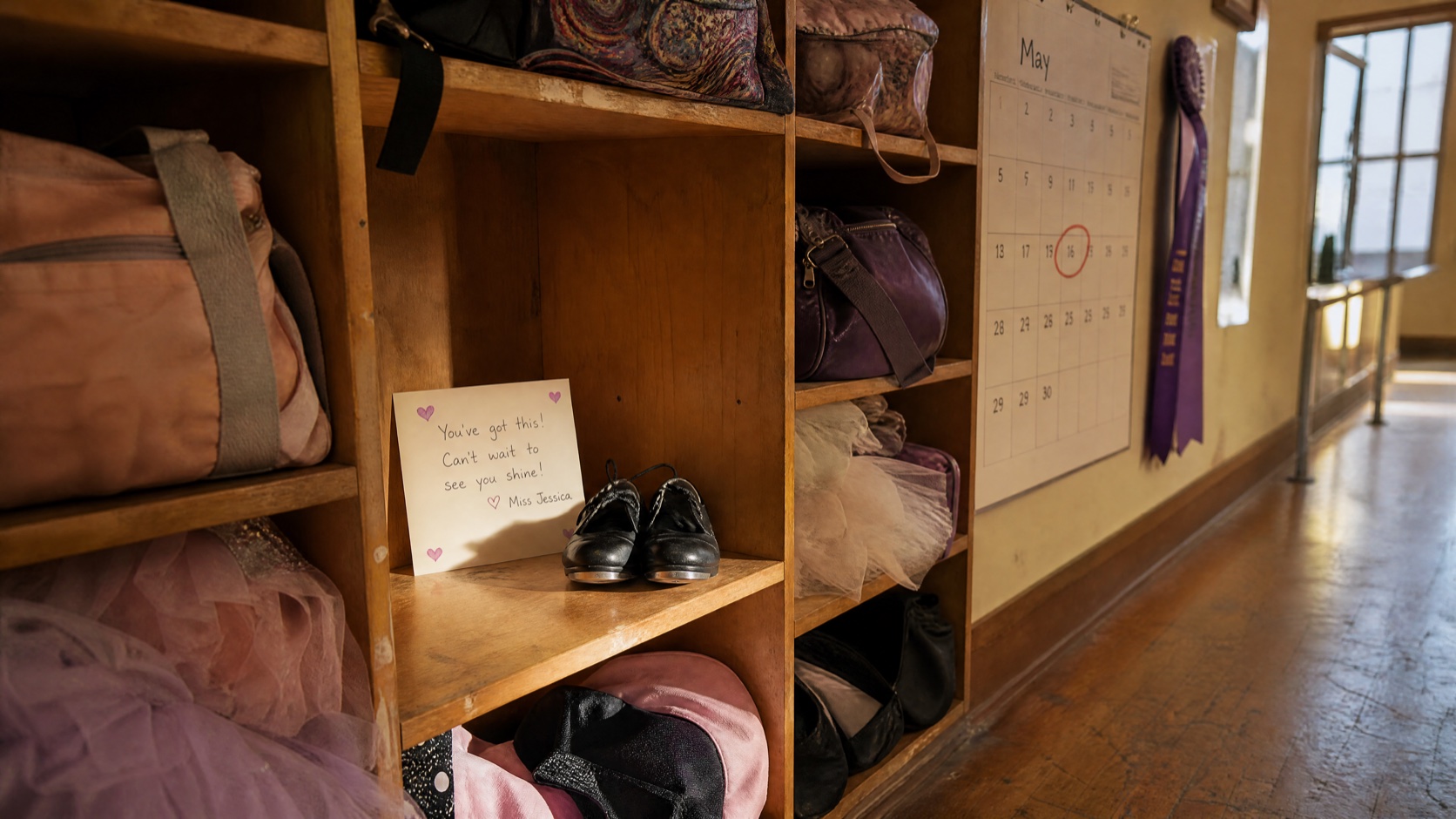
What The Studio Wants
What The Studio Wants
Rhythm House Dance Studio wants absence texts to turn into clean next steps instead of front-desk catch-up. Parents need quick guidance, and staff need policy-valid make-up options without losing track of attendance risk.
The studio still owns roster changes, class capacity, policy exceptions, and family-sensitive conversations. The agent prepares the path and the summary, then leaves final updates reviewable.
Fewer front-desk interruptions, clearer parent options, and roster authority still with the studio.
Why Help Is Needed
Why Help Is Needed
A missed class is rarely just a note. It can trigger make-up eligibility, class capacity checks, recital prep concerns, illness policies, and churn signals if a family keeps drifting.
Without help, parents wait for staff replies, make-up rules get applied inconsistently, and attendance-risk families can disappear quietly.
Absence details arrive at inconvenient times
Parents often text right before class, after office hours, or from the parking lot when staff is teaching.
Make-up eligibility is policy-heavy
Age, level, enrolled class, missed date, expiration window, recital season, and capacity all affect the answer.
Attendance drops can signal churn
Repeated absences need a warm staff follow-up before a family decides the program is not working.
What The Parent Sees
What The Parent Sees
A parent texts that their child will miss class. The agent records the absence, explains the relevant make-up policy, and offers policy-valid options that staff can confirm.
If the family sounds frustrated, confused, or repeatedly absent, the agent keeps the tone supportive and routes a summary to the studio instead of treating it like a routine reschedule.
- 1.
Report the absence
The parent gives the dancer name, class, missed date, reason if relevant, and contact details.
- 2.
Check the policy path
The agent compares the absence against make-up windows, level rules, capacity limits, and recital constraints.
- 3.
Offer valid options
The parent sees clear make-up choices or learns why staff confirmation is needed before the roster changes.
- 4.
Flag the staff summary
Rhythm House receives absence notes, proposed make-up options, churn-risk signals, and any approval needs.
What The Agent Needs To Do
What The Agent Needs To Do
The agent needs to behave like a policy-aware front-desk assistant. It should support parents quickly while keeping class capacity and roster authority with Rhythm House staff.
Apply make-up policy exactly
Use approved absence windows, class levels, capacity rules, recital-season limits, and expiration language.
Prepare roster-safe options
Show only plausible make-up paths and label them as staff-confirmed when the roster has not been updated yet.
Detect family risk
Flag repeated absences, frustration, schedule mismatch, injury, or cancellation language for staff follow-up.
Escalate exceptions gracefully
Route refunds, medical issues, recital conflicts, capacity exceptions, and unhappy parents to studio staff.
What The Studio Gets Back
What The Studio Gets Back
The studio gets an attendance packet instead of a loose parent text. It shows the absence, policy path, proposed make-up options, and whether a staff member needs to confirm or intervene.
Family and class context
Dancer name, parent contact, enrolled class, level, missed date, and absence reason.
Policy decision path
Eligibility window, class-level fit, capacity assumptions, and recital-season constraints.
Proposed make-up options
Valid options to confirm, unavailable options, and any parent preference or schedule constraint.
Risk and follow-up note
Repeated absence signals, parent sentiment, exception needs, and recommended staff action.
From there, Rhythm House can confirm the make-up, revise the option, reply personally, or mark the family for retention follow-up.
Why This Matters
Why This Matters
The value is a calmer front desk and fewer families slipping through cracks. Parents get faster policy guidance, and staff can review a structured queue instead of reconstructing texts.
It also turns attendance operations into retention intelligence by making repeated absences visible before a cancellation email arrives.
Faster parent answers
Parents understand absence policy and next steps without waiting for office-hour replies.
Cleaner roster control
Staff sees proposed changes and policy assumptions before anything becomes official.
Earlier retention signals
Repeated absences and frustration are flagged while the studio can still help.
How Follow-Up Gets Smarter
How Follow-Up Gets Smarter
Each staff confirmation or revision teaches the agent which make-up options are truly workable and which parent messages need a different tone.
Over time, the studio can see where policy wording, schedule capacity, or retention outreach needs improvement.
Confirmed make-ups
Staff approvals show which class-level and capacity assumptions are reliable.
Policy exceptions
Manual changes identify rules that need clearer public language or earlier escalation.
Attendance risk outcomes
Families saved, paused, or lost improve future risk flags and follow-up timing.
What It Might Cost
$35-$85/mo
Estimated monthly operating cost
For this dance studios workflow, a reasonable demo estimate is $35-$85/mo per month. That assumes Starter plan usage, moderate message volume, and human review for exceptions.
- Starter plan
- $15/mo
- Estimated usage
- $20-$70/mo
- Approximate total
- $35-$85/mo
Assumptions
- Parent absence reports and make-up requests over SMS and web chat
- Staff review for roster updates, capacity exceptions, and unhappy-family cases
- Moderate volume for a single-location dance studio
- No unattended roster changes or payment adjustments in the demo scenario
This is an illustrative estimate, not a pricing guarantee. Actual cost depends on enabled channels, message volume, voice minutes, image generation, and workflow rules.
Try it
See this agent in action.
The floating Try me button opens a scripted example. Build similar starts from the same workflow-backed demo structure.