
What The Salon Wants
What The Salon Wants
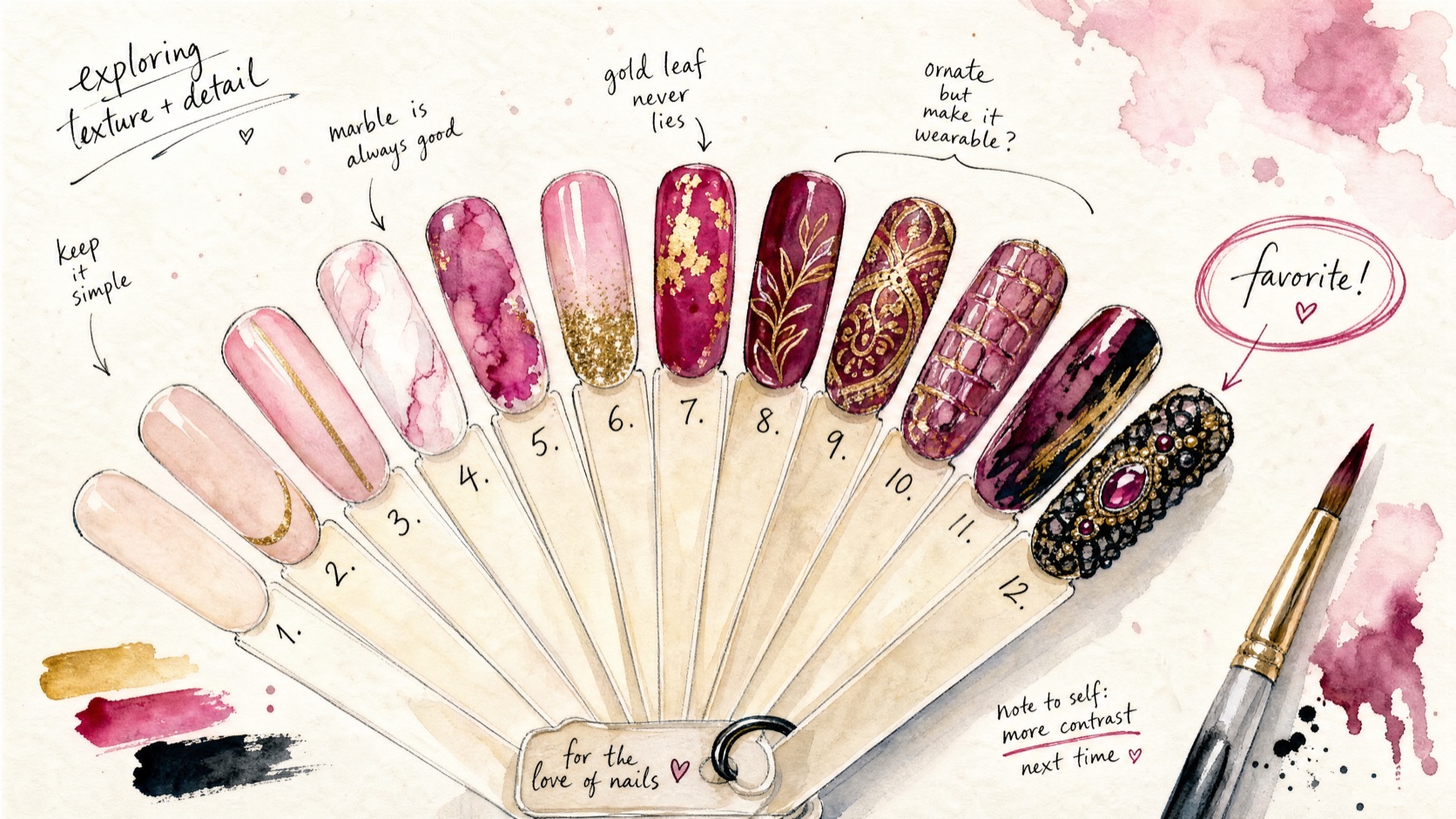
Lacquer & Co. Nails wants photo-based nail-art requests to arrive with the right service tier, time estimate, price range, and technician fit before the front desk or owner has to decipher the design.
The salon still needs to approve final pricing, confirm availability, and decide whether a complex set is a fit. The agent turns the inspiration photo into a prepared quote path instead of promising a finished booking on its own.
Faster quote prep, fewer under-booked custom sets, and final pricing still with the salon.
Why Help Is Needed
Why Help Is Needed
Nail-art photos hide the details that change time and price: current nail length, extensions, charms, chrome, hand-painted art, repairs, removal, and which tech can do the work.
Without intake help, the salon either under-quotes from a pretty image or asks the client a long back-and-forth while the appointment opportunity cools.
A photo is not a service tier
The same design can be simple polish art, gel-x, acrylic, 3D charms, chrome, or advanced hand painting depending on the client starting point.
Time depends on hidden constraints
Current nails, desired length, removal, repairs, and nail health can add time before the design even starts.
Final quotes need owner approval
High-custom designs, unusual materials, rush requests, and discount questions should route to a human before anything is promised.
What The Client Sees
What The Client Sees
The client uploads an inspiration image and answers a few clarifying questions about length, current nails, date, budget, and preferred tech. The agent explains the likely service tier and why the estimate is a range.
The client gets a clear next step: a review-ready quote request or a proposed appointment handoff that Lacquer & Co. confirms.
- 1.
Upload the inspiration
The client sends the nail-art photo and describes desired length, shape, colors, and must-have design elements.
- 2.
Clarify the starting point
The agent asks about current nails, removal, extensions, repairs, allergies, timing, budget, and preferred technician.
- 3.
Prepare the estimate path
The agent maps the request to likely menu tiers, time blocks, price range, and complexity flags.
- 4.
Send for confirmation
The salon receives the image, assumptions, suggested tech, and any owner-approval flags before confirming.
What The Agent Needs To Do
What The Agent Needs To Do
The agent needs visual intake plus salon-specific guardrails. It should read the photo, ask only quote-changing questions, and keep final numbers and appointment confirmation reviewable.
Interpret nail-art complexity
Identify likely design elements such as chrome, french, 3D charms, hand painting, ombre, extensions, and removal needs.
Map to the salon menu
Use Lacquer & Co. service tiers, duration rules, price ranges, tech specialties, and add-on language.
Phrase estimates carefully
Label all pricing as a range until the salon confirms nail condition, materials, and technician capacity.
Escalate custom or risky sets
Route high-complexity, damaged-nail, rush, allergy, or unusual-material requests to the owner with context.
What The Salon Gets Back
What The Salon Gets Back
The salon gets a quote packet with the photo translated into service terms. It shows what the client wants, what assumptions drive price and duration, and what must be confirmed before booking.
Client and inspiration
Contact details, uploaded image, requested colors, shape, length, and must-have elements.
Service assumptions
Likely base service, add-ons, removal or extension needs, estimated duration, and tech fit.
Quote range
Menu-backed range, assumptions, complexity notes, and anything requiring owner approval.
Appointment handoff
Preferred dates, suggested tech, open questions, and confirmation language for staff.
From there, Lacquer & Co. can approve the range, assign a tech, ask one follow-up, or decline designs that do not fit the menu.
Why This Matters
Why This Matters
The value is more accurate custom booking prep. The salon avoids surprise duration overruns, clients understand why complex art costs more, and owner approval stays visible.
It also makes photo-based inquiries feel premium instead of chaotic: clients get a quick, informed response while the salon protects its calendar.
Less under-booked custom work
Complex sets are flagged before they squeeze into the wrong appointment length.
Clearer client expectations
Clients see the design elements, add-ons, and assumptions behind the price range.
Cleaner technician handoffs
The assigned tech starts with the photo, service tier, constraints, and open questions.
How Follow-Up Gets Smarter
How Follow-Up Gets Smarter
As staff revise quote ranges, reclassify designs, or assign different techs, those edits improve future service-tier mapping.
The loop is especially useful because nail-art pricing depends on visual complexity and staff judgment, not only a static menu.
Approved designs
Confirmed sets teach which visual elements map to each Lacquer & Co. service tier.
Owner corrections
Edited ranges and duration notes sharpen future quote assumptions.
Tech outcomes
Completed appointments show which tech specialties and time blocks fit specific design types.
What It Might Cost
$35-$85/mo
Estimated monthly operating cost
For this nail salons workflow, a reasonable demo estimate is $35-$85/mo per month. That assumes Starter plan usage, moderate message volume, and human review for exceptions.
- Starter plan
- $15/mo
- Estimated usage
- $20-$70/mo
- Approximate total
- $35-$85/mo
Assumptions
- Photo intake on a moderate share of quote requests
- Web and SMS follow-up for clarifying details
- Owner review for high-custom, rush, allergy, or damaged-nail cases
- No automatic final price or appointment confirmation without salon approval
This is an illustrative estimate, not a pricing guarantee. Actual cost depends on enabled channels, message volume, voice minutes, image generation, and workflow rules.
Try it
See this agent in action.
The floating Try me button opens a scripted example. Build similar starts from the same workflow-backed demo structure.